
Documents in the Taylor County Deed Index
The Taylor County Clerk's compiled index reaches well beyond conveyance deeds. A search can turn up liens, releases, wills, and miscellaneous filings. Uniform Commercial Code records appear there too. Pick the closest document type before searching. Then use the party role attached to that instrument. A lien entry, for instance, does not itself transfer title. A will or probate filing may explain how a later deed was authorized. That is why the full range of Taylor County property records matters here.
| Record group | Index role to try | What the document can answer |
|---|---|---|
| Deed or conveyance | Grantor and grantee | Who conveyed an interest, to whom, and under what legal description |
| Lien, deed of trust, or release | Creditor and debtor, or named parties | Whether a related instrument or release was recorded |
| Will or miscellaneous record | Named party and document type | Whether an estate-related filing may explain a conveyance |
| UCC filing | Debtor and secured party | Whether a business or personal-property filing is indexed |
These categories describe the index groups in the Clerk's search. Labels are shorthand. The exact legal effect depends on the document itself, so open or request the underlying instrument whenever the distinction matters.
Search Both Parties in the Taylor County Index
Grantor means the party conveying an interest. Grantee means the party receiving it. Are you unsure which side of a transfer a name occupies? Search it in both roles. A prior owner will commonly appear as grantor on the outgoing deed. That same person appears as grantee on the earlier acquisition. The index also assigns creditor and debtor roles for other filings. So include the party position in a name search. Do not rely on a general keyword alone.
The compiled search offers document type, subindex, books, party role, and name fields. Note any book or page from another record. Compare that reference against the result you get. Try reasonable name variations where the source spells initials differently. Do not treat a similar name as a confirmed match. Wait until the instrument's date, description, and parties all line up.
For a Taylor County deed search, carry the parcel's details alongside the party names. Include the district, map, and parcel numbers. Older deeds may describe acreage, district, road, stream, or adjoining owners. They may not list a street address at all. The legal description is the bridge. Prior book and page references work too. Together they connect a modern parcel to its deed chain.
Taylor County’s “And Being” Reference
The County Clerk's deed requirements sheet calls for an "And Being" paragraph. It cites the prior owner. The earlier date and deed book and page follow. Together they tie a newly recorded instrument to the preceding link in the chain, which helps most when a parcel carries an old road or district description rather than a current street address.
The phrase is a pointer, not proof. It does not confirm that the prior transfer was valid or that no intervening interest exists. Open the cited deed first. Compare the district and legal description. If the document names an heir, trustee, executor, or special commissioner, check the related estate or court material to understand that party's role.
Two references guide the work. The West Virginia grantor and grantee indexing rule and the Taylor County deed requirements sheet shape how Taylor County deed records are indexed, and the sheet lists prior-owner detail, a sales listing, and a consideration declaration.
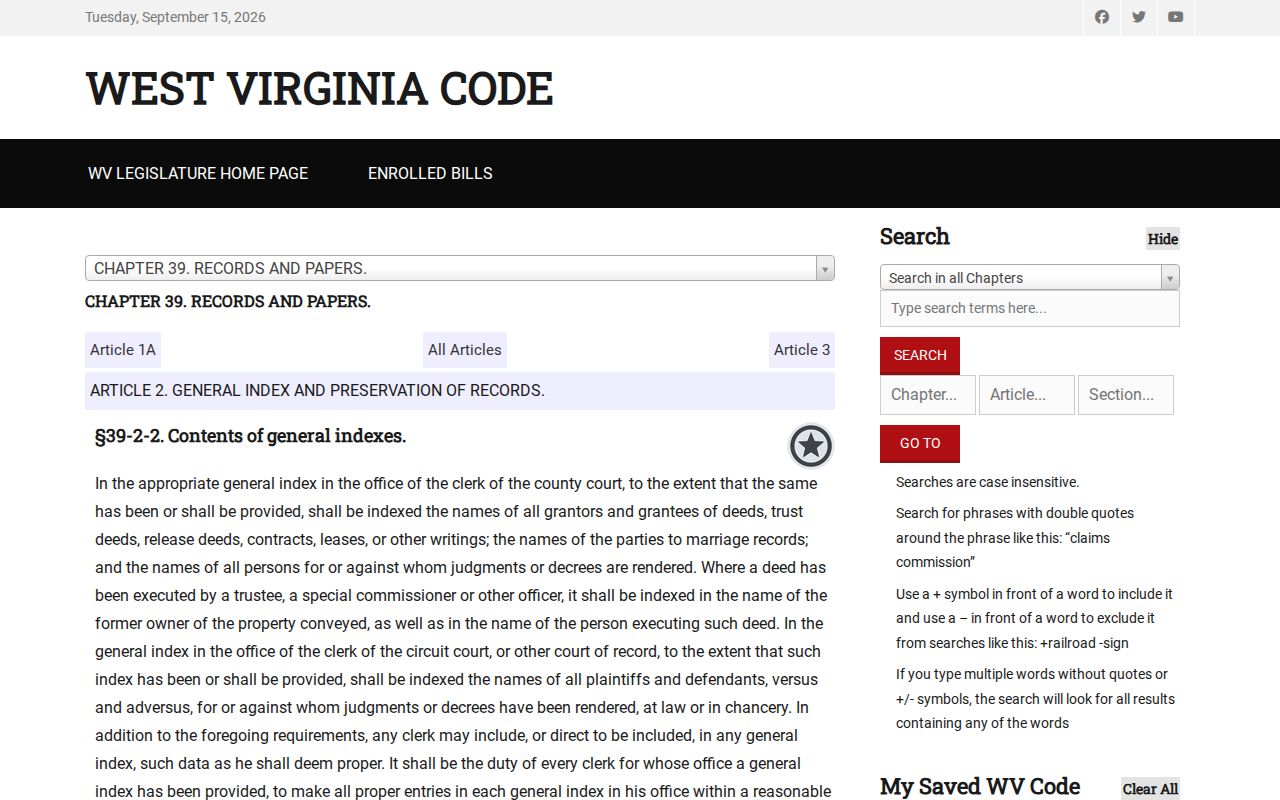
West Virginia Code §39-2-2 requires grantor and grantee indexing. A former owner must be indexed whenever a trustee or officer conveys property.
Consideration in Taylor County Deeds
A deed's consideration declaration states a monetary amount or a reason for an exemption. Taylor County's filing sheet lists many exemptions. Wills and transfers on death qualify. So do transfers of $100 or less, certain trust transfers, partitions, corporate mergers, leases, spouse or parent-child transfers, some gifts and nonprofit conveyances, government transfers, and security instruments. Corrective or quitclaim deeds without consideration can be exempt. So can divorce-related transfers under §48-2-32.
That list explains why a deed may show no taxable consideration even when an interest changed hands. It is not a market-value estimate, though. Compare the declaration to the instrument type, the parties, and the legal description, and ask the Clerk if the exemption basis stays unclear rather than inferring a sale price from the assessment roll.
The County Clerk's recording checklist provides the local declaration and exemption examples. Copy fees are not stated there.
Match the Deed’s Description to the Parcel
After locating a record, compare the county or district, legal description, named parties, and recording reference with the property being researched. Never rely on the address alone. Historic instruments often identify land by acreage, adjoining tract owners, a road, or a metes-and-bounds description instead. An Assessor parcel number helps with the current roll. It may not appear in an older deed.
A chain can hold more than one instrument type. A corrective deed may appear. So may a trustee conveyance, estate distribution, release, or partition. Any of these can explain why the name sequence does not look like a simple sale from one person to another. Record the instrument date and book/page for every link, then read the source document to understand what interest was conveyed.
Taylor County’s Historic Deed Books
Taylor County deed books reach surprisingly far back. The West Virginia Archives finding aid catalogs deed books covering 1844 through 1901. It also includes a deed index spanning 1844 to 1970. Those spans describe the Archives' holdings, not the modern online portal. So a blank result in an online property search does not end the trail. Treat the cataloged index as the fallback.
For an older transfer, pull the book and page from the "And Being" reference. That identifies the volume. Then search the Archives deed index. Ask the Taylor County Clerk about originals or office copies. Ask the Archives about microfilm. The finding aid also catalogs wills from 1844 through 1969 and probate volumes. Those probate records can explain a conveyance that looks nothing like a normal sale. An estate transfer often carries the decedent's name rather than a buyer's. The West Virginia Archives Taylor County finding aid supplies every one of these date spans.
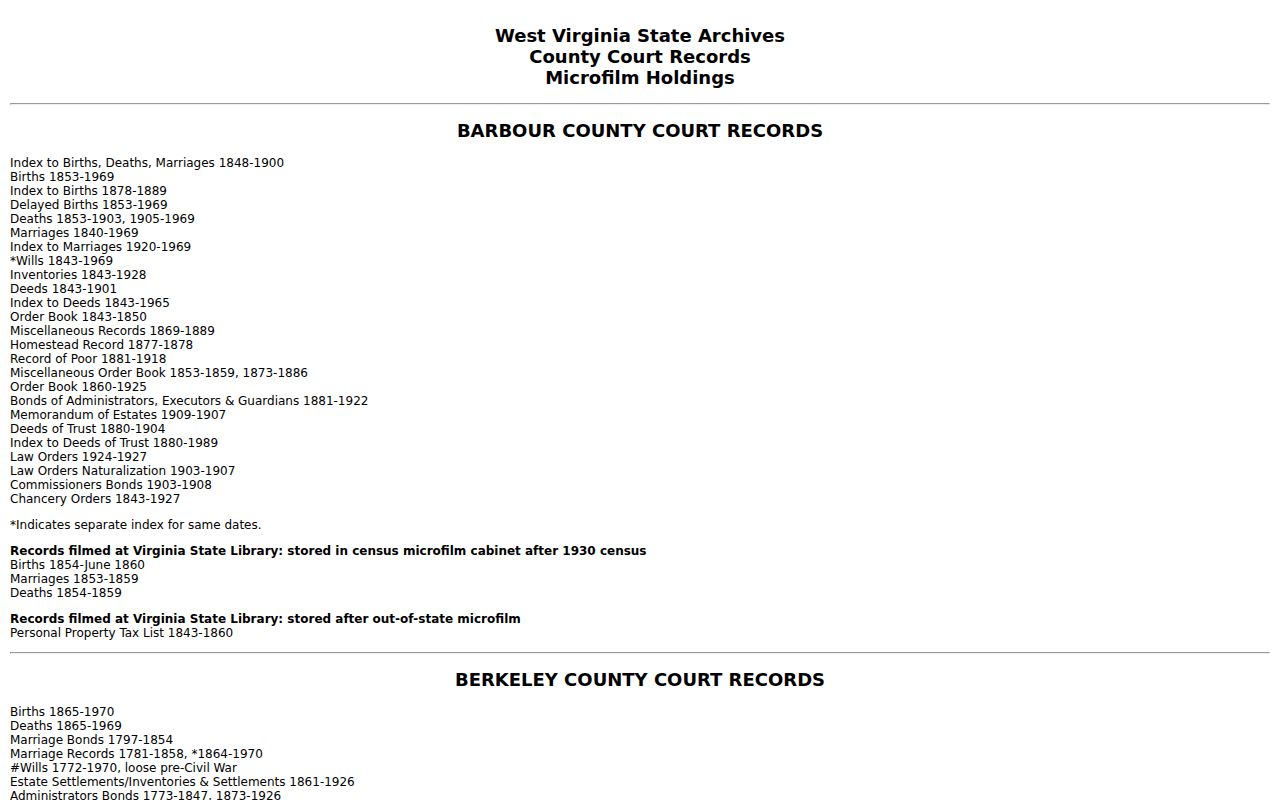
Ownership research in Taylor County does not stop at the modern web portal. When the current property search returns no match, the cataloged index at the Archives can carry the deed chain further back.
Copying a Taylor County Deed
Some deed questions the office alone can answer. Whether every index hit offers an online image, what an image costs, and what a certified copy runs are details to confirm by phone. The Clerk's document inquiry page links the public index and gives a weekday office route. Call ahead before relying on a portal preview. A certified copy or a full legal description often matters in a transaction.
If a record is not online, write the custodian. Give the party names, the deed type, the approximate date, the district, and any book/page or parcel number. West Virginia FOIA guarantees inspection and copying of public records unless an exemption applies. Keep the written request specific. The custodian may charge actual reproduction cost but nothing for search or retrieval labor.
The Taylor County Clerk sits at 128 W. Main St., Annex 2, Grafton, WV 26354. Weekday hours are 8:30 a.m. to 4:30 p.m. The phone line is (304) 265-1401, option 4. The state clerk directory and the West Virginia County Clerk Directory both repeat the office details.

Use the directory for directions, then ask the Clerk directly which copy method and charge fits the specific deed.
Watch for redactions in a deed image. The Clerk says Social Security numbers are meant to be redacted and asks users to alert the office when one slips through. Never copy or republish a sensitive number.
Request a Taylor County Deed Copy
No image online? Certified copy needed? Contact the Taylor County Clerk with the strongest record locator you have. Give both party names, the approximate recording date, and the document type. Add the district, the legal description, and the book/page or instrument number if known. The Clerk's public materials set no universal online cutoff, image charge, or certified-copy fee. So ask which retrieval method and cost apply before sending anything.
The Clerk's document inquiry service links the compiled deed index and related office information. The office address is 128 W. Main Street, Annex 2, Grafton, WV 26354. Listed weekday hours run 8:30 a.m. to 4:30 p.m. Call 304-265-1401, option 4, or fax 304-265-2889. Does the answer point to an older book? The West Virginia Archives finding aid describes Taylor County deed books and indexes held outside the modern portal.
A written public-records request should name the record with reasonable specificity. West Virginia FOIA allows the custodian five business days to respond. Weekends and legal holidays are excluded. The law permits charging actual copy cost, not labor for search or retrieval. The request route is not a promise that every record sits online.
One caution on images. If a deed image shows a Social Security number, do not share it. The Clerk says such numbers are intended to be redacted. The office asks the public to alert it when one appears.
Check the Taylor County Chain One Link at a Time
Build a Taylor County chain of title one link at a time. Start with the current assessed owner label. Then find that party as grantee in the most recent deed. Take the former owner from that instrument. Use the "And Being" book/page reference to step backward. The next deed should tie the former grantee to the preceding grantor. Names shift, though, through marriage, estates, trusts, corporate reorganizations, and plain spelling variation. Note each transition rather than forcing a one-to-one name match.
Remember what the Clerk index is. It makes names and document references searchable. It does not certify that a chain is complete or that no unrecorded interest exists. For title work, have the full sequence reviewed by a title professional. The Archives deed index and probate holdings help with older links. County offices explain current retrieval and copy procedures for the property records you need.