
Start a Taylor County Former-Owner Search
A former-owner search in Taylor County begins with two anchors. The first is the current parcel number. The second is the name on the Assessor tax roll. Pull the newest deed from the County Clerk's compiled index. That instrument names the grantee who acquired it. That same person becomes the grantor you hunt next. Check every link you record against date, party role, legal description, district, and book/page. Addresses alone go stale as a search key. Older deeds often describe land by acreage, road, district, or adjoining owners instead. Write each book and page down before stepping back another generation. Note any special capacity, such as executor, trustee, heir, or special commissioner. Those roles point to estate or court records worth pulling. A title chain comes only from documents. It never comes from a familiar surname or a mailing address.
Follow the Grantor and Grantee Trail
The Taylor County Clerk index offers several filters. You can narrow by document type, subindex, book, party name, and role. In any deed, one side gives and the other receives. Search the current owner as grantee to find the acquisition deed. Then search that owner as grantor to surface the next earlier transfer. Keep repeating this pairing with each prior grantee. Watch for spelling drift and name changes at every step. West Virginia law sets out how recorded parties get indexed. It can name a former owner in certain officer or trustee conveyances. When an unusual party role appears, read the statute. Read the instrument itself side by side with it. Read West Virginia Code § 39-2-2 on grantor and grantee indexing alongside the Taylor County index entry.
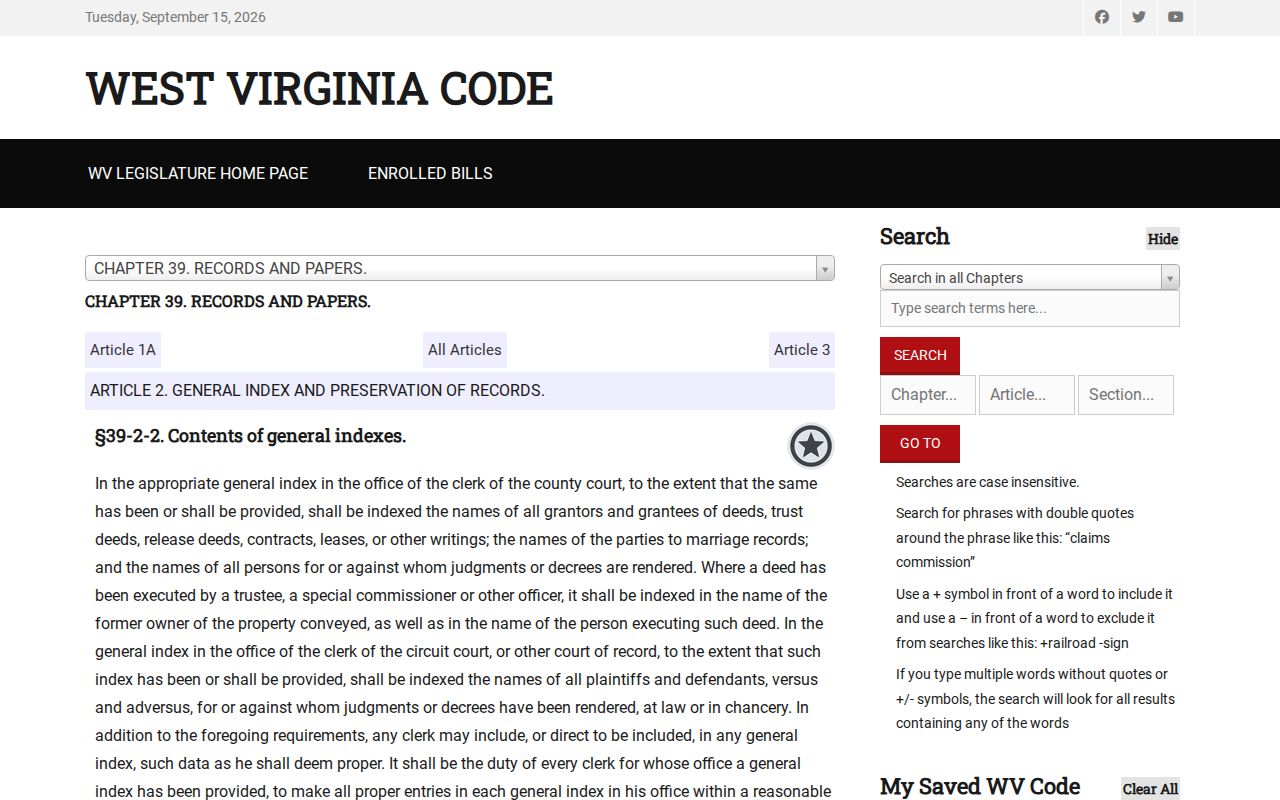
Statutes and index entries organize names. The deed itself still holds the transfer details, so inspect it directly.
Taylor County’s Archive Date Range
The modern Taylor Clerk portal displays no verified start year for its online index. So a missing result proves nothing about earlier deeds. The West Virginia Archives finding aid lists Taylor deed books covering 1844 to 1901. A deed index runs from 1844 to 1970. Those holdings form a known historical path. The modern portal's cutoff stays undefined. When the current index runs out, treat the online deed citation as a lead. Search the Archives index next. Then ask the Clerk or Archives about the volume or microfilm. Custody of originals and office copies stays an office question. The finding aid also lists wills, order books, fiduciary inventories, and court records. Those can clarify a former owner of record. A cataloged span is not a promise. Not every volume is digitized or searchable by modern street address. Gather the prior owner, date, and book/page first. Use the Archives index to find the earlier entry. If an image is not online, staff can explain the reading-room, microfilm, or copy process. The WV Archives Taylor County finding aid lists the historic deed years and index coverage.
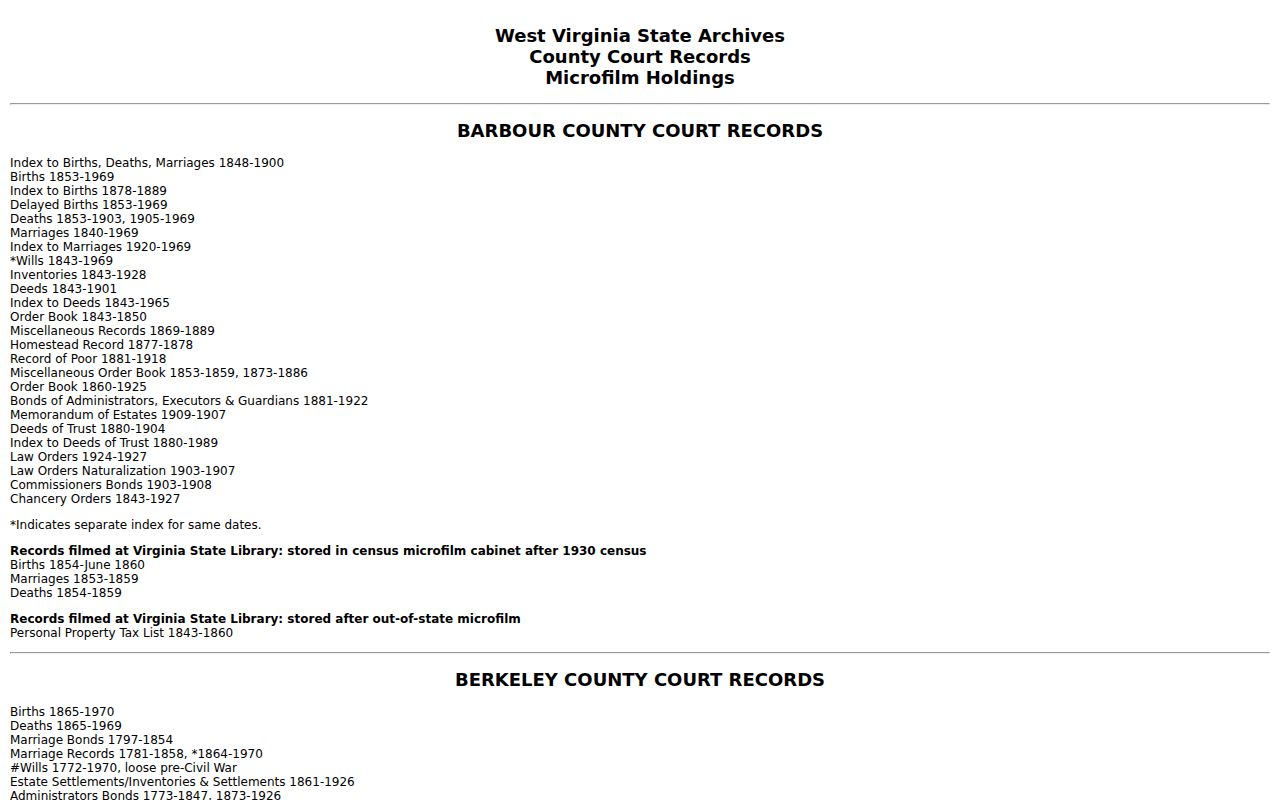
Note: those archive dates describe cataloged holdings, not a claim about when the online Clerk index begins.
Grafton Newspaper Clues for Prior Owners
The Taylor County Public Library holds newspaper microfilm, directories, obituaries, cemetery readings, and family histories. These can tie a former owner to an older street. They can also tie one to an estate event. Nothing there is indexed. Staff need an exact publication date before they can search. A deed, probate order, or family paper often supplies that date. The Grafton Daily Sentinel runs from 1907 to April 1974, missing only November 1921. The Weekly Sentinel survives in two runs, 1897–1901 and 1906–1929. Grafton Eagle covers 1884–1885. Selected Grafton News issues survive from 1934–35 and 1969–72. Treat the 1921 gap as a gap, not proof that an event never happened. The local history collection lists the collection and microfilm periods.

Library material adds context for names and dates; the deed and its book/page citation remain the land-record trail.
Requesting Older Taylor County Records
When a deed, probate volume, or court file is missing from the online index, contact the custodian directly. Give the office the owner names, a parcel description, the rough period, and any book/page reference you have. The Taylor County Clerk holds recorded instruments and local estate records. West Virginia Archives can identify historic volumes and microfilm. The library may offer historical clues, though it cannot certify title.
West Virginia FOIA requests go straight to the office holding the record. State law asks for a reasonably specific description. It also requires a response as soon as practicable, within five non-weekend, non-holiday days. An office may charge actual reproduction costs, but not search or retrieval labor. The Taylor County Clerk publishes no posted deed-copy fee. So ask about certification and archive reproduction charges when you submit the request.
Build a note for each prior owner with the source, date, role, and deed reference. That habit pays off. It points you back to the right Taylor County volume. Do this when the trail moves from the web index to a paper book.
A strong request names both parties and the approximate recording year. It should also include the property district and any book/page or legal-description clue. Your search may touch probate, a will, or a court order. Identify that record group separately from the deed. The Clerk, the Archives, and the library each hold different materials. One office simply cannot pull another custodian's file.
When a Taylor County Owner Chain Passes Through an Estate
An estate transfer rarely looks like an ordinary sale. The deed may name an executor, administrator, trustee, heir, or special commissioner, and a probate order or will explains where that authority came from. The West Virginia Archives finding aid covers Taylor County wills and probate materials alongside its deed books. When a conveyance points to an estate, pull the related name and case reference too.
Keep the recorded deed as the land-transfer evidence. Treat probate documents as supporting context. A family relationship or an obituary alone cannot show which parcel was conveyed or whether every heir signed the deed.
Account for Name Changes and Search Gaps
Historical Taylor County indexes are full of initials and spelling variants. They also hold abbreviated given names and shifting surname forms. Search both the grantor and grantee sides. Use the prior-owner book/page reference from the deed's "And Being" paragraph whenever it appears. A blank in the modern portal proves nothing. The online index simply does not reach back to every historic transfer. An older conveyance may live only in a paper volume.
If the chain stops, ask the Clerk which volume or image matches the citation. Ask Archives staff about the cataloged deed index or microfilm. Write down the search terms and year range you tried. Then a later request does not start from scratch.
Former-owner research usually needs several source types in sequence. Use the Clerk index to find an instrument. Use the Archives index to reach an older deed book. Turn to probate material to understand a fiduciary conveyance. Turn to the library collection for a date or name clue. Label every item by custodian and record type. An obituary or directory entry then never gets mistaken for a recorded land transfer.
Use Identity Records as Context, Not Title Proof
A former owner's name or dates are sometimes uncertain. State vital-record instructions explain how to request a certificate for identity or family-history context. They do not establish who owned Taylor County land. Only the deed, probate order, or other recorded instrument proves a transfer or estate authority. Review West Virginia vital-record copy instructions before folding a certificate into your name-search workflow.

The state instructions cover vital-record copies, not land ownership; rely on a recorded deed to establish a property transfer.
Limits of a Former-Owner Record Search
A chain built from public indexes is a research aid, not a title opinion. The modern online index has no published start date. Archived holdings carry their own catalog limits. An index can also omit context that sits inside the actual deed or probate file. A parcel may have changed shape or number over the years.
For legal reliance, obtain the instruments. Have the chain reviewed by a title professional or attorney. Use a licensed surveyor for an exact boundary. Label archive, library, Assessor, and Clerk references by custodian. That way a newspaper clue is never mistaken for a recorded conveyance.