
What Taylor County Property Value Means
The figure in a Taylor County assessment record is a tax number. It is not a sale price. Nor is it a fresh appraisal. The Assessor puts assessed value at 60 percent of market value, and the roll takes its annual snapshot each July 1. Read every entry with its assessment year attached. A recent sale, an improvement, or a market shift may not appear as a one-to-one change in the current number.
| Market value | The Assessor’s estimate of market value used in the assessment method |
|---|---|
| Assessed value | 60 percent of market value under the stated Taylor County method |
| Sale consideration | An amount or exemption declaration on a recorded deed, not an appraisal |
| Tax bill | A separate ticket based on the assessment and applicable tax calculation |
These figures answer different questions. The deed shows what the instrument declares, the assessment roll supports taxation, and the bill reflects the tax office's account. Give each number its date and its custodian.
Look Up a Taylor County Assessed Value
Start at the West Virginia assessment portal. Pick Taylor County. Search by owner name, street, district, map, parcel, subparcel, property class, tax class, or land use, then open the parcel record. The Basic, Appraisal-Sales, Advanced, and Prior Ownership modes each cut the data a different way. Record the year, the full parcel ID, the classification, and the displayed value. Only then compare a second source.
An unclear result often yields to the full parcel number with its suffix and leading zeroes. A street address can hold more than one parcel. A mailing address may not match the site. Ask the Assessor to confirm the right tax-roll entry.
Read the Taylor County Assessor's annual valuation explanation to see the stated assessment ratio and cycle.
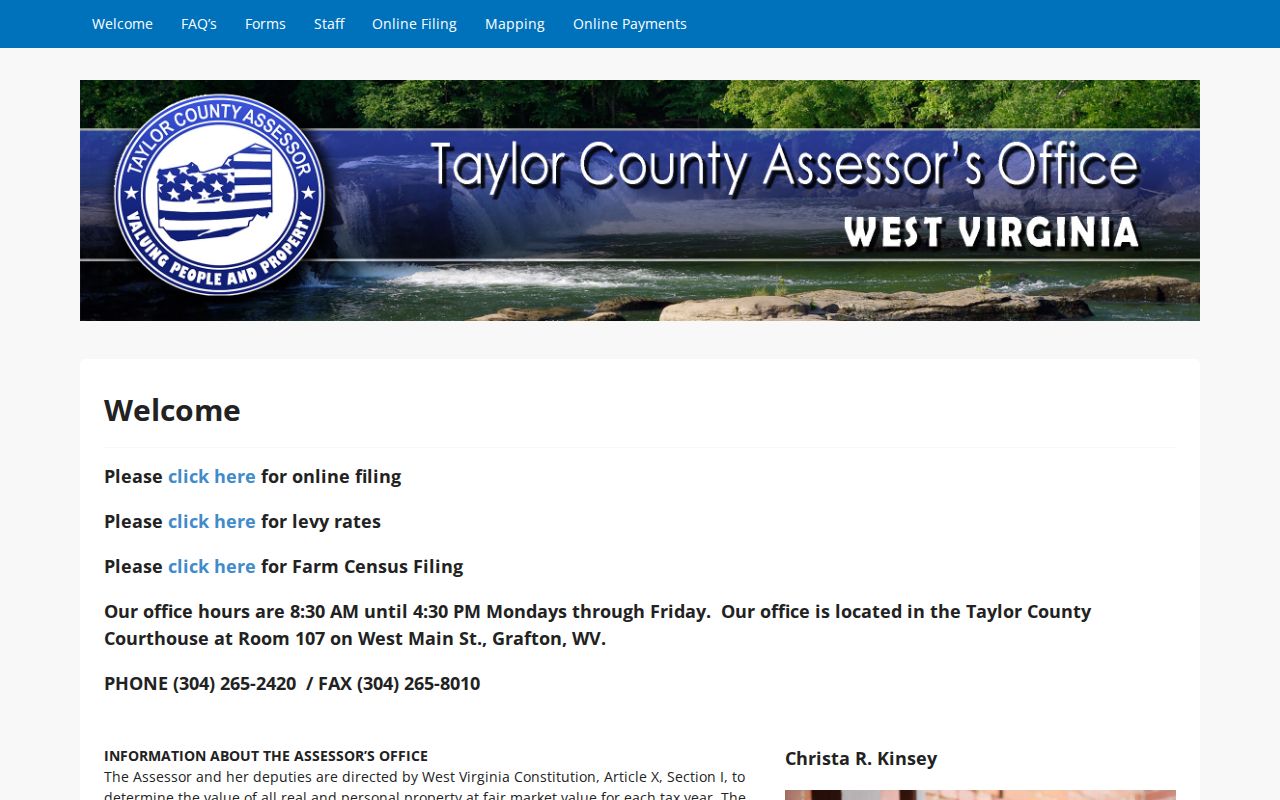
The Assessor's page walks through the county's assessment method. A portal result then supplies the year and value for one parcel.
Taylor County Appraisal and Sales Mode
The WV assessment portal splits its search into Basic, Appraisal/Sales, Advanced, and Prior Ownership modes. The basic roll supplies the annual assessed figure. Modes serve different questions. The Appraisal/Sales view is a route to related sale or value context, though it lists no Taylor County sample result, coverage date, or field list. Confirm any sale entry with the Assessor first.
A deed records the instrument's declared consideration, which can be exempt or nominal under the Clerk's filing rules. The two numbers differ in kind. Keep the parcel ID and year with each number. Never substitute the tax value for a current appraisal.
Compare a Sale with the Taylor County Roll
A recorded deed may state a consideration declaration or an exemption reason. The Assessor portal offers an Appraisal-Sales mode as well. That view publishes no Taylor County sample result, coverage date, or full field list. Treat each item as a lead. A deed amount rarely equals the Assessor's market estimate.
Before comparing numbers, confirm both records point to the same parcel, transaction date, and property description. A transfer can span several tracts. It can also convey a partial interest. A deed may report an exempt or nominal amount. Ask the Assessor how a sales entry feeds the assessment when its context is unclear.
The County Clerk's deed requirements sheet calls for a consideration declaration or an exemption basis at filing. Its examples include family and trust transfers, partitions, qualifying low-consideration transfers, corrective instruments, government conveyances, and divorce-related transfers. Those categories explain why a deed amount may miss an arm's-length price. They supply no comparable-value math. Use them as context, not valuation.
Keep the recorded date, grantor, grantee, and legal description beside any consideration figure. Check whether the deed covers more than one tract. Check for a partial interest too. Dividing one declared amount across a single assessed parcel misleads fast. When in doubt, read the whole deed.
The July 1 Value Date and Assessment Year
West Virginia anchors its annual property assessment cycle to July 1. That date fixes the tax-roll year. It does not mean inspectors visited every home that day. Keep the assessment year beside the dollar value. Compare figures only within a meaningful period.
An owner who recently bought, renovated, subdivided, or corrected a parcel may find the deed, map, and assessment carrying different dates. Treat a mismatch as a prompt to call. Ask the relevant office rather than assuming the value is wrong.
For a year-to-year comparison, hold the district, map, parcel, suffix, classification, and tax year constant. Parcel numbers change after splits or mapping updates. Ask the Assessor how to connect an old identifier to the current one. A historic sale under a former number deserves caution. Compare it only once land area and interests match.
An Assessed Value Is Not a Current Appraisal
Taylor County assessments rest on a simple ratio. The taxable figure is 60 percent of appraised value. It serves the tax roll alone. That amount is not an appraisal, an asking price, or an offer, and it never reflects one parcel's full condition or improvements. Comparing assessment years works fine. So does tracing a parcel's tax-roll status. Neither use predicts what a buyer would pay, so get a qualified appraisal before any sale, loan, estate, or dispute decision, and never treat the public figure as the market price.
Ask About a Taylor County Assessment Review
The Board of Equalization and Review window in Taylor County runs February 1 through February 28. Confirm the schedule each year. The Assessor can explain current deadlines, evidence requirements, and the request procedure. The county posts no online appeal form. No local fee schedule appears online either. Keep the review aimed at the roll. A deed correction, by contrast, belongs with the County Clerk. A tax balance goes to the Sheriff's Tax Office. A boundary question needs a surveyor.
Bring the parcel number, the assessment year, and a clear description of the value or classification issue. That framing helps the office respond. Gather the assessment notice, the parcel ID, the stated tax year, and the comparable property or document behind your question before calling. Ask the Assessor which evidence it accepts and how the February schedule applies this year. Each office keeps its own records. See Taylor County property-tax records for the annual calendar, office contact, and record distinctions.
Limits of a Taylor County Property Value Search
A portal result is one public assessment entry for a single parcel and a single cycle. It does not show the full evidence behind the Assessor's calculation. It certifies no sale price. It guarantees no tax payment and establishes no title. Fields can vary, so ask the Assessor about anything that is not self-explanatory.
Reconciling an assessed figure with a deed or ticket takes care. Check the parcel ID first. Then verify the tax year, the recording date, and the record custodian. Mismatches hide in those fields. Get an official copy when it matters, and keep the source and date beside the number.
The Taylor County Assessor offers four search modes: Basic, Appraisal-Sales, Advanced, and Prior Ownership. Each mode surfaces different context. Related assessment details and prior-owner information can appear, but the fields are not guaranteed to match on every record. If a sale comparison looks surprising, ask the Assessor which mode and year produced it before treating it as a market transaction.
A formal valuation decision needs an appraisal prepared for that purpose. A tax question is different. It follows the county review calendar. Supply parcel-specific evidence there. The amount due is separate again: request the Sheriff's Tax Office ticket, and never collapse a market estimate, an assessment, and a balance into one number.
When you call the Assessor, have the district, map, parcel, suffix, physical address, and assessment year ready. Deed comparisons add two more questions. What is the instrument date? Does it cover one tract or several?